Centering Equity
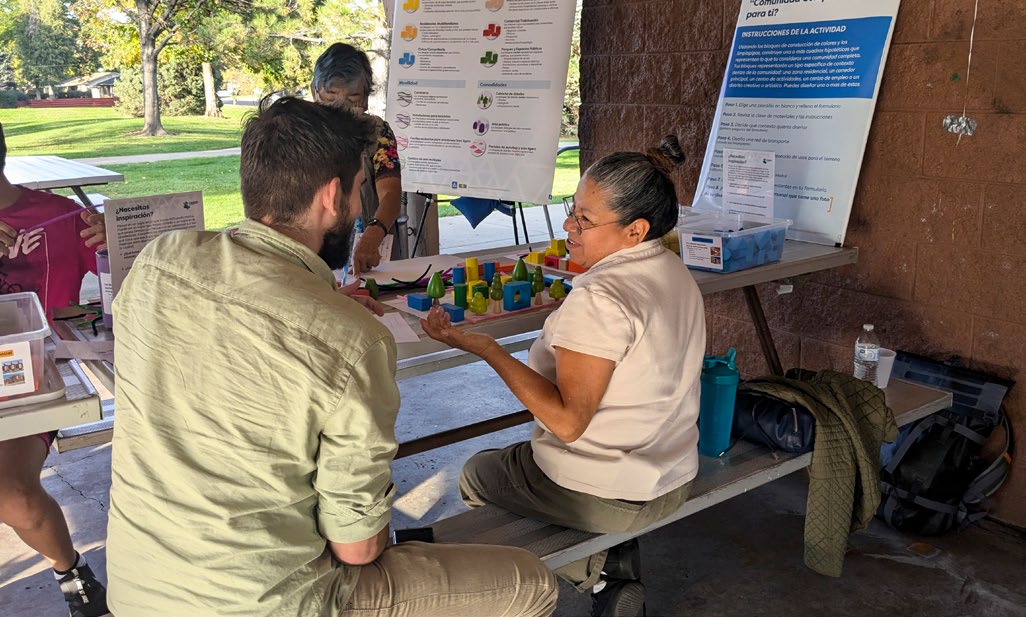
Equity refers to a state where all people–regardless of individual or group characteristics and backgrounds–have the necessary resources, support, opportunities, and environment to lead a happy, healthy, and fulfilling life. It is the thoughtful, inclusive, and calibrated action that leads to equal outcomes. Equity is a direct response to longstanding trends throughout history where structural and institutional systems actively and passively created differential treatment and disparate distributions of societal and environmental opportunities, benefits, threats, and challenges.
Historically, these systems benefitted White middle and upper-class communities, while disadvantaging Black, Indigenous, and other People of Color (BIPOC)and working-class communities. This has led to significant disparities in educational attainment, representation in leadership, health outcomes, exposure to risks, generational wealth, and economic opportunity. For example, according to the 2023American Community Survey, 62 percent of White non-Hispanic residents in Lakewood own their homes compared to 43 percent Hispanic/Latino residents. In terms of education, 53 percent of White non-Hispanic residents have received a Bachelor’s degree compared to 19 percent for Hispanic/Latino residents. Understanding and recognizing these disparities is essential for developing targeted policies and programs that foster a more just and equitable community.
Goal 3 Strategies: Centering Equity
This goal demonstrates the commitment to centering equity and seeks to acknowledge and address these disparities through policies, programs and partnerships. Primary strategies include prioritizing equity in all City policies, expanding staff expertise and capacity for equity-focused initiatives, building connections and uplifting Indigenous history and culture, and committing to meaningful community engagement and outreach. Supporting strategies illustrate how equity permeates across all issues, challenges, and priorities of the Comprehensive Plan.
Primary Strategies
-
Research and report on the local impacts of historic and current policies, programs, and practices that marginalize or disadvantage certain groups of people. Identify actions and opportunities for restorative justice.
-
Establish, enact, enforce, and monitor best practices and standards to integrate equity considerations into City policymaking, programs, actions, and events that will meaningfully improve accessibility, inclusivity, and cultural responsiveness.
-
Cultivate staff with specialized education and experience in advancing equity to provide training and guidance throughout the city organization, provide input and recommendations for policies and programs, and strive to remove barriers to civic participation in Lakewood.
-
Develop relationships with Indigenous groups and tribal leaders with ancestral connections to Lakewood, and work with them to integrate their traditional ecological knowledge, local history, cultural practices, and perspectives into plans and policies.
-
Regularly conduct a robust, meaningful, and wide-reaching outreach campaign to understand the broad range of community concerns, needs, desires, and issues. In particular, design these campaigns to thoughtfully engage those who are traditionally the hardest to reach and most often underrepresented
-
Building on existing efforts, develop and implement a comprehensive strategy for proactively addressing environmental justice across all relevant City operations. As a baseline, this strategy should be informed by the regular collection and monitoring of necessary data—both quantitative and qualitative.
Supporting Strategies
-
Prioritize efforts to ensure equitable access to resources that help all residents enjoy a healthy life (e.g.,, access to food, medical care, safe housing, transportation, arts, parks, recreation, outdoor spaces, and others.)
-
Engage with community partners to identify gaps in healthy food access. Support and encourage efforts to fill those gaps through actions such as community gardens, farm stands, fresh food distribution in local stores, attraction of new grocery stores, retention of existing grocery stores, regulatory changes, food rescue, education for gardening, and preservation and others.
-
Integrate health considerations into City policymaking to improve the health of all communities and people in Lakewood.
-
Work with community organizations, businesses, and neighborhood groups to increase crime prevention services through services such as Crime Prevention Through Environmental Design (CPTED),Neighborhood Watch, and other rigorously evaluated evidence-based strategies delivered in homes, schools, or the community that have been shown to prevent crime or reduce recidivism. Community members using the separated bike lanes on Garrison Street.
-
Work with the community to identify and prioritize cleanup projects and areas for increased maintenance to ensure Lakewood’s public spaces are safe and inviting for all. Clean-up projects may range from graffiti removal to alley, park, or neighborhood clean-up events.
-
Regularly assess the impacts of climate change and related hazards on the Lakewood community to understand potential risks to people, the natural and built environment, and the economy. Coordinate across internal departments to utilize the climate impact assessment findings to establish, maintain, and train staff on a Climate Adaptation Strategy that supports disaster preparedness, response, recovery, and communitywide resilience, including a social vulnerability tool that can be used to prioritize program development, provision of services, and city infrastructure projects.
-
Strengthen community cohesion and increase community capacity by continuing neighborhood-level programs and services including the Sustainable Neighborhoods Program and the Neighborhood Support Team; by strategically locating resilience hubs or similar community-serving facilities to provide education, services, and shelter during hazard events; and by developing and implementing policies and outreach programs with local partners to support households that are disproportionately impacted.
-
Building on existing efforts, develop a comprehensive communications and outreach strategy for all City operations to ensure that all information and outreach efforts are accessible, engaging, and broad-reaching. This should include specific outreach strategies and accommodations for individuals with disabilities and Lakewood’s diversity of cultural identities and languages. Regularly update this strategy to reflect changing technologies, demographics, and communication preferences.
-
Ensure that city programs, services, events, meetings, and amenities are welcoming and accessible to all residents. As appropriate, consider opportunities for distinct offerings that cater to specific groups or particular needs within the community, including considerations such as cultural responsiveness, relevance, and languages, disabilities, families and youth, seniors, economic status, and others.
-
Invite, encourage, and work to remove barriers for residents to take an active role in the city through intentional offerings for civic participation that actively fosters interaction between residents of different backgrounds and experiences. This may include, but not be limited to, elections, volunteering, applying for city grants, joining city boards and commissions, providing public comments on projects, participating in planning processes, accessing special events, participating in creative placemaking efforts, or other public participation processes.
-
Continue to implement the Imagine Tomorrow Plan and any future updates to the Plan.
-
Support the addition of accessible park amenities and play features that include safe access to nature, convenience, sensory-friendly elements, interpretation, and relief from heat.
-
Prioritize park acquisition and improvements in areas in need of parkland to support the community’s physical, mental, and social health.
-
Seek funding and partnerships necessary to achieve high-quality arts, parks, and recreation programs, services, and facilities that meet community needs as defined in the Imagine Tomorrow Plan and any future updates to the Plan.
-
Provide opportunities for participation in recreation programs and services specific to older adults, teens, and those with disabilities.
-
Celebrate the community through art and cultural events, programs and performances that showcase local and regional talent, traditions, and cultural diversity.
-
Encourage a mix of housing types through development regulations, policies, and incentives to accommodate different household sizes, income levels, preferences, and needs.
-
Promote mixed-income developments throughout the city to ensure integration of neighborhoods of all incomes.
-
Through the Community Development Block Grant (CDBG) Five-year Consolidated Plans and Annual Action Plans, identify and prioritize funding for key projects that will have a positive impact on low-to-moderate income populations in target areas.
-
Encourage universal accessibility design of affordable units subsidized by the City of Lakewood.
-
Prioritize the preservation and production of housing that is affordable to low to moderate income residents by assisting Public Housing Authorities (PHA) or nonprofit housing developers through programs, policies, and incentives that ensure long-term affordability.
-
Minimize the involuntary displacement of vulnerable populations, such as low-income households, older adults, and people with disabilities, as the city grows and changes. Use tools to allow reinvestment in and preservation of existing housing stock, and allow appropriately scaled infill such as accessory dwelling units, duplexes, and tandem houses.
-
Improve Housing Quality Standards (HQS) in ownership and rental housing through existing and innovative rehabilitation programs, using a variety of funding sources such as Community Development Block Grant (CDBG) funds.
-
Improve access to homeownership, especially among low income residents and marginalized groups, through Down Payment Assistance programs or partnerships with nonprofit housing developers.
-
Expand mediation services to proactively assist tenants who are at-risk of eviction, by engaging landlords and tenants in mediation before their cases reach the County Court responsible for evictions.
-
Develop a micromobility strategy that addresses the safety, access, comfort, and convenience of vulnerable road users, and parking or storage for these methods, including people walking and rolling by all modes, including wheelchairs, skateboards, scooters, strollers, bikes, one-wheels and more.