A Safe and Connected Community for Walking, Biking, and Rolling
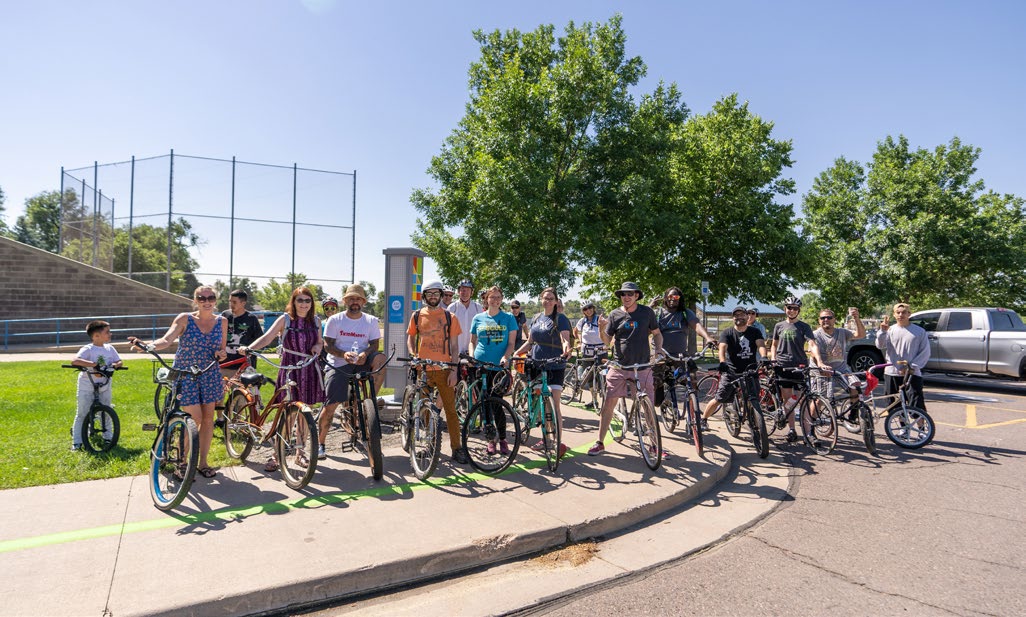
Infrastructure for safe, comfortable, convenient, and connected active transportation is a key component of developing a robust multi-modal network. The Bicycle Plan and Lakewood Trails and Connectivity Report highlight the value that active transportation provides through mental and physical health benefits, improved air quality, reduced congestion, increased mobility, and equitable access for all residents. High-quality active transportation systems can also support complete neighborhoods, where residents can easily access daily goods, needs, services, and leisure amenities.
Goal 22 Strategies: A Safe and Connected Community for Walking, Biking, and Rolling
This goal promotes the idea that—with improved infrastructure and targeted investment—walking and bicycling could become the primary modes of transportation for most local trips within Lakewood’s neighborhoods. Primary strategies include continuing implementation of the Bicycle Plan, developing a strategy to inform and prioritize micromobility and walkability investments ensuring connectivity and safe crossings, and continuing funding to support these efforts. Supporting strategies illustrate the relationship between active transportation, area specific planning, climate impacts, community health and more.
Primary Strategies
-
Develop a micromobility strategy that addresses the safety, access, comfort, and convenience of vulnerable road users, and parking or storage for these methods, including people walking and rolling by all modes, including wheelchairs, skateboards, scooters, strollers, bikes, one-wheels and more.
-
Continue to implement the Bicycle Plan and any future updates to the Plan, with a core goal of increasing bicycle network connectivity and increasing the comfort of existing bicycle facilities.
-
Improve the pedestrian environment to ensure that residents and community members have safe, comfortable and convenient access to destinations such as schools and the public transit network. Consider the development of a walkability plan that would also include information and education programs to improve transportation safety and wayfinding.
-
Prioritize closing gaps in the network grid and first/last mile connections, including construction of missing sidewalk and trail links throughout the city, such as those identified in the Belmar/downtown Lakewood Connectivity Study, and north-south crossings of the 6th Avenue freeway, in order to improve overall connectivity, and provide more/greater variety of route options. Prioritize investing in additional separated bike lanes as proposed in the Bicycle Plan.
-
Evaluate locations where it is appropriate to install pedestrian, cyclist, and equestrian crossing improvements such as enhanced crosswalks, signals, refuge medians, or increased visibility at high-traffic mid-block locations and work with the Colorado Department of Transportation (CDOT) and other partners to implement improvements.
-
Identify and prioritize opportunities to enhance bicycle and pedestrian infrastructure, including approaches for regular maintenance such as snow removal and sweeping.
Supporting Strategies
-
Contribute to regional efforts to improve air quality by reducing transportation-related emissions, enhancing green infrastructure, tree canopy, vegetative cover, and other nature-based solutions, and by implementing air quality monitoring and public awareness campaigns.
-
Continue to implement the 40 West ArtLine Framework Plan and any future updates to the Plan.
-
Encourage land uses that integrate housing, employment, and community amenities within walking distance of each other.
-
Expand access to reliable and convenient public transportation options within neighborhoods.
-
Ensure that neighborhoods have access to safe and accessible routes by designing designated street corridors that prioritize pedestrian safety and encourage walking, riding and rolling that incorporate sidewalks, and complete street designs.
-
Prioritize gaps in the network grid, first and last mile connections, improvements to overall connectivity and a greater variety of route options to more efficiently move people through Lakewood.
-
Update regulations as necessary to accommodate shared transportation.