Sustainable and Climate Resilient Public Infrastructure
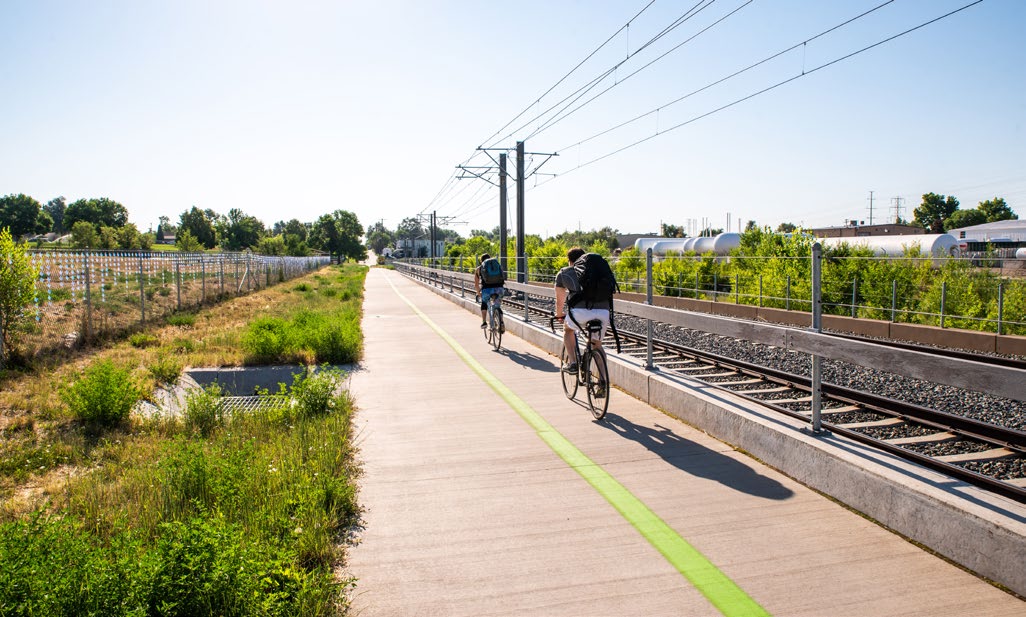
To meet Lakewood’s goals to achieve sustainable growth, net zero GHG emissions by 2050, and improve community health and resilience, it is essential to update and develop new public infrastructure. This includes:
- Ensuring City infrastructure (such as roads, water, storm and sanitary sewer) will be able to meet future demands;
- Providing convenient and safe multi-modal transportation infrastructure to encourage low emissions mobility;
- Reducing impervious services and increasing green infrastructure to support natural stormwater drainage, shade, air and water quality, and biodiversity; and
- Using nature-based solutions to simultaneously restore ecosystem health and provide community benefits
The effects of climate change, paired with widespread automobile-oriented development practices and regulations, have disproportionately impacted older Lakewood neighborhoods in a number of ways, including increased exposure to extreme heat due to the urban heat island effect, increased flood risk due to impervious surfaces, rising energy and insurance costs, and lower air quality due to pollution. Sustainable and climate resilient infrastructure must address these disparities and the varying levels of risk and need across the community. Lakewood is committed to integrating equity and environmental justice as it implements public infrastructure projects, programs, funding, and initiatives.
Goal 18 Strategies: Sustainable and Climate Resilient Public Infrastructure
This goal aims to ensure that public infrastructure is sustainable and resilient to climate change impacts and hazards, prioritizes underserved neighborhoods for public infrastructure improvements. It also ensures Lakewood community members have safe, affordable, and equitable access to low-emissions transportation options, open and natural spaces, and daily needs like energy, clean air, and water.
Primary Strategies
-
Develop and maintain green and gray infrastructure that supports public health and safety, reduces risk of hazards, integrates into pedestrian-friendly streetscapes, and supports a healthy natural environment through implementation of nature- based solutions that promote climate mitigation, adaptation, and resilience. Assess and identify opportunities to mitigate existing hazards and enhance climate resilience of infrastructure, city assets, and communities.
-
Enhance the urban tree canopy by planting trees along trails, sidewalks, parks, and waterways in priority heat risk areas and targeted areas identified through regular canopy assessments; developing an urban forestry plan; and engaging the public through educational materials, discounted tree sales, and tree planting events.
-
Integrate natural spaces, tree-lined streets and green infrastructure into site and corridor planning and recreational spaces to improve air quality, support biodiversity, create connected pedestrian greenways and enhance the safety and aesthetics of the corridor
-
Develop and implement a municipal operations greenhouse gas emissions inventory and decarbonization plan in alignment with the City’s greenhouse gas reduction targets to prioritize actions that eliminate climate and health impacts from city buildings, fleet, and operations.
-
Support and participate in Regional and Statewide efforts to expand sustainable infrastructure and services, increase renewable energy generation, energy storage, and grid reliability, and to support decarbonization through shared administration of programs providing technical expertise, navigation services, workforce development, and other incentives and resources in support of decarbonization and environmental sustainability.
-
Support the transition to zero emissions vehicles by prioritizing electrification of the City’s vehicle fleet, expanding public charging infrastructure, updating building and zoning codes to encourage widespread access to charging, and leveraging technical assistance and funding opportunities. Regularly evaluate city policies and strategy documents to ensure that they are relevant to the latest transportation infrastructure and technology advancements.
-
Establish and implement a plan, including targets and strategies, for city-owned facilities and operations to support the transition to renewable energy and improving energy efficiency while driving continual reductions of greenhouse gas emissions and air pollutants over the entire lifecycle of the asset based on market innovation and cost factors.
Supporting Strategies
-
Protect lives, prevent property and environmental damage, and stabilize the economy during large-scale emergencies and disasters. Collaborate with internal departments and external organizations to proactively plan for hazard mitigation, emergency preparedness, emergency response, and recovery efforts in order to increase community resilience.
-
Regularly assess the impacts of climate change and related hazards on the Lakewood community to understand potential risks to people, the natural and built environment, and the economy. Coordinate across internal departments to utilize the climate impact assessment findings to establish, maintain, and train staff on a Climate Adaptation Strategy that supports disaster preparedness, response, recovery, and communitywide resilience, including a social vulnerability tool that can be used to prioritize program development, provision of services, and city infrastructure projects.
-
Continue to update and integrate climate hazard, risk, resilience, mitigation, adaptation, and impact analysis into city documents, reports, plans, and policies related to neighborhoods and corridors, municipal facilities and operations, parks and open space, infrastructure, zoning and building codes, asset management, engineering regulations, procurement, insurance, emergency preparedness, and the city budget process, among others.
-
Minimize the use of chemical fertilizers, pesticides, and other toxins that negatively impact pollinator species and overall ecological health.
-
Develop and implement a Biodiversity Strategy to identify projects, policies and programs that address invasive species, support ecological integrity, incorporate regenerative practices, and reduce the loss of biodiversity.
-
Responsibly conserve vibrant parks and open space resources through preservation of biodiversity and wildlife habitat, green infrastructure, sustainable practices and environmental stewardship.
-
Develop and implement a citywide multi-modal transportation plan that includes updates to the existing roadway classifications and establishment of modal hierarchies to create a coordinated and cohesive vision for Lakewood’s future transportation system.