Creative Placemaking
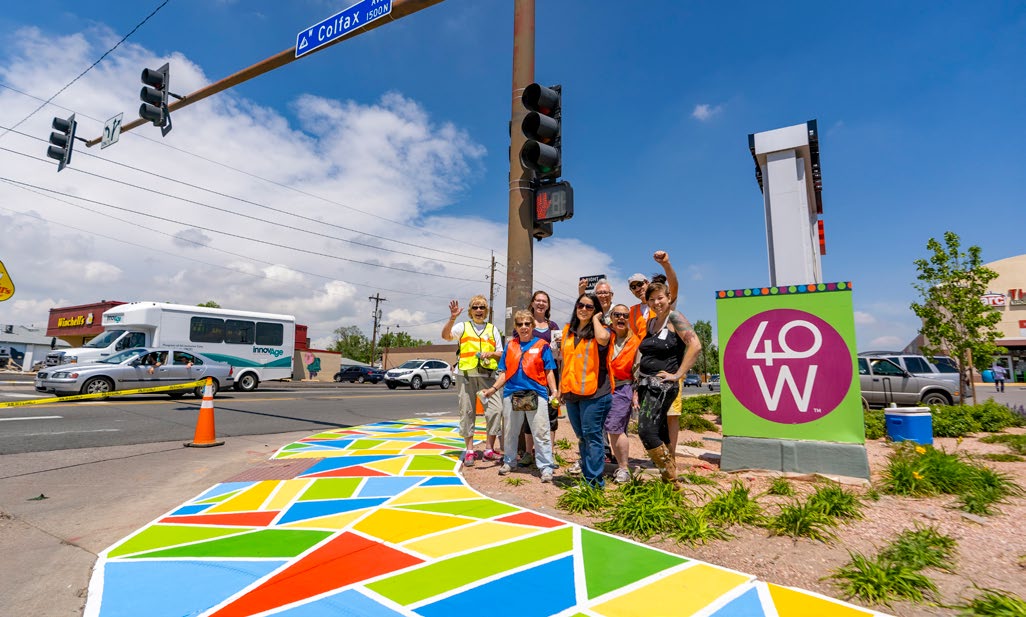
Lakewood’s 40 West ArtLine Framework Plan, adopted in 2023 following more than a decade of community engagement and support for the ArtLine project, explains creative placemaking as a concept where diverse partners use arts and culture to shape the character of a place to spur local economic development, enhance social connections, and improve the physical environment. Creative placemaking can be a tool to help address many different community challenges and goals. A 2022 Urban Land Institute study found that it promotes social cohesion, reduces crime, and helps build trust among diverse groups. The 4-mile long 40 West ArtLine outdoor arts experience, an idea conceived of by community members in the state-certified 40 West Arts Creative District in northeast Lakewood, is a significant local creative placemaking project example. Similarly, Alameda Connects has created the Discover Alameda Trail, a 5-mile walking and biking route that activates the Alameda corridor with art, history, and storytelling. Additional temporary or longer-term creative placemaking projects throughout the city can help tell Lakewood’s story and address community goals in the years to come.
Goal 12 Strategies: Creative Placemaking
The Creative Placemaking goal centers on community-driven and city and partner supported initiatives that utilize art and culture to enhance the quality of life for Lakewood residents, businesses, and visitors. The strategies include working with the community and artists to create vibrant public spaces, integrating art throughout the city, supporting arts and culture hubs, fostering creative entrepreneurship, and continually adapting placemaking projects based on community feedback. The supporting strategies show the interconnectedness between creative placemaking and the built environment, transportation networks, the economy and more.
Identifying the lifespan of the creative placemaking projects and maintenance needs is also an important consideration. Some projects are intended to engage the community and activate places for a short period of time during a specific timeframe or event, where others, like the projects mentioned above, have longer-term goals and needs to realize their full potential. For creative placemaking efforts in Lakewood, the city will prioritize community engagement, celebrate local artists, and leverage existing plans, including the Lakewood Public Art Plan and the 40 West ArtLine Framework Plan, to achieve this goal.
Primary Strategies
-
Increase authentic and positive community interactions with all members of the police department through broad and inclusive educational and public outreach opportunities.
-
Promote streetscape and public space improvement projects to ensure that all destinations and community gathering places offer safe, pleasant, and active experiences for all users. These projects should incorporate elements such as tree canopy and vegetation, shade, lighting, public art, seating, wide sidewalks or pathways, crosswalks, signage and signalization, wayfinding, green infrastructure, and others.
-
Ensure community engagement and participation is central to any creative placemaking work and that initiatives reflect the character and features of the neighborhoods where projects occur.
-
Improve and activate publicly owned spaces (such as parks, plazas, streetscapes) with art, landscaping, seating, creative placemaking, and interactive elements.
-
Work with the community, local artists, arts organizations, community partners, and developers to support the integration of art and placemaking installations into the urban fabric to beautify spaces, create identity, and reflect local heritage and values.
-
Continue to support the 40 West ArtLine, 40 West Arts Creative District, Alameda Corridor, Lakewood Cultural Center/Heritage Lakewood Belmar Park, and other areas that may emerge to serve as a hub for artistic expression, creative industries, and cultural tourism.
-
Foster creative entrepreneurship by ensuring City policies support incubator and startup spaces, funding opportunities, and business development resources for artists, cultural enterprises, and individuals wishing to pursue creative ventures in Lakewood. Strategically encourage these activities in locations where there is already a concentration of creative activity or where the introduction of new creative activities could breathe life and activity into new spaces.
-
Establish mechanisms for ongoing evaluation, feedback, and adaptation of creative placemaking initiatives based on community input and measurable outcomes.
Supporting Strategies
-
Develop relationships with Indigenous groups and tribal leaders with ancestral connections to Lakewood, and work with them to integrate their traditional ecological knowledge, local history, cultural practices, and perspectives into plans and policies.
-
Continue to implement the Imagine Tomorrow Plan and any future updates to the Plan.
-
Continue implementing strategies and partnerships that weave arts and culture into all aspects of the City’s work.
-
Advocate for and encourage collaborations, partnerships, and cross promotion of local artists and creatives to ensure a thriving creative community.
-
Facilitate the creation of transformative art destinations throughout Lakewood by encouraging diversification of the public art collection, engaging the community and creating public art that is discovered organically and intentionally.
-
Continue to implement the Public Art Plan and any future updates to the Plan.
-
Continue to implement the 40 West ArtLine Framework Plan and any future updates to the Plan.
-
Promote Lakewood’s arts and cultural programs, events, facilities, and resources to attract new businesses, visitors and residents.
-
Implement a collaborative approach to develop context- sensitive area plans for targeted corridors, neighborhoods and activity hubs, prioritizing areas with high redevelopment pressure, displacement concerns, environmental hazards, infrastructure needs or other factors to create equitable planning processes. The outcome of these plans can help identify area assets and opportunities for change that are reflective of community input and cohesion.