Preservation of Lakewood’s Historic and Cultural Resources
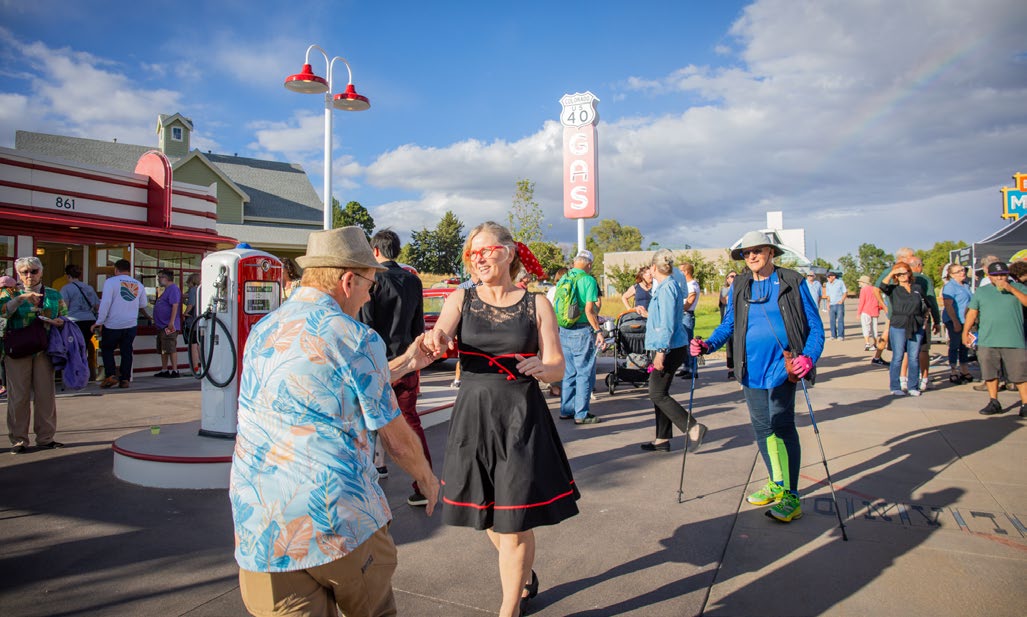
Historic and cultural preservation efforts seek to celebrate and protect Lakewood’s unique community heritage through the conservation and enhancement of historically or culturally significant landmarks, districts, and museum collections. Americans for the Arts states “the collective memory of a community resonates inside each member of that community, and if that connection to history is weakened then the ability to participate fully in the community’s present and future is weakened as well.”
Lakewood manages historic preservation through the Historic Preservation Commission and Heritage Lakewood Belmar Park which are guided by the Historic Preservation Plan, the Lakewood Heritage Center Master Plan, and the City’s Historic Preservation Ordinance. The City’s Historic Preservation Program provides valuable assistance to applicable property owners to support investment in their historic properties, to consider appropriate structural and use adaptations, and to help maintain affordability while preserving the original character that contributes to the community identity.
Protecting and preserving Lakewood’s historic structures, architecture, cultural resources, and historic collections, contributes to a stronger sense of place and intriguing design that attracts visitors, economic activity, and community events. The National Trust for Historic Preservation has documented positive impacts of historic preservation on the economy through jobs, property values, heritage tourism, environmental impact, social impact, and downtown revitalization.
Goal 10 Strategies: Preservation of Lakewood’s Historic and Cultural Resources
This goal aims to preserve Lakewood’s heritage and historic collection, maintain historic structures, and determine the appropriate amount of flexibility in their maintenance. Primary strategies expand on implementation of established guidance in the Historic Preservation Plan and the Lakewood Heritage Center Master Plan, with a focus on education, data management, regulatory incentives, national standards, and continued investment in the Lakewood Preservation Program. Supporting strategies illustrate the relationship between historic preservation, arts and culture, placemaking, maintenance of city assets and sustainability.
Primary Strategies
-
Educate the public about the economic, environmental, and cultural benefits of historic preservation to build collective value around Lakewood’s heritage. Provide educational materials and outreach strategies for both residents and visitors.
-
Promote educational tours, programs and events that highlight the City’s history. Expand educational materials and outreach strategies for both residents and visitors.
-
Continue to implement the Historic Preservation Plan and any future updates to the Plan.
-
Continue to implement the Lakewood Heritage Center Master Plan and any future updates to the Plan.
-
Develop and maintain a citywide database and other internal resources to ensure that Lakewood’s historic resources are incorporated into community planning, economic development, and sustainability efforts. Provide information to property owners of potentially significant resources to encourage designation of local landmarks to ensure the continued protection of Lakewood’s historic resources.
-
Consider the update of existing and use of new regulatory tools that can protect historic resources and character, while also providing enough flexibility to accommodate appropriate growth and change. The use of such tools should also consider and mitigate affordability and economic impacts of preservation objectives. Examples may include conservation districts, zoning overlays, design guidelines, tax credits, waivers or other incentives for adaptive reuse and preservation, rezoning guidelines, facade improvement programs, or other support programs.
-
Continue to maintain Certified Local Government Status and a qualified Historic Preservation Commission, and explore resources to support the historic preservation program.
-
Utilize Secretary of the Interior’s Standards for the Treatment of Historic Properties. Maintain historical facilities using national standards and best practices for education, public service and collections care to ensure excellence in the care and preservation of the community’s artifacts and resources held in the public’s trust.
Supporting Strategies
-
Develop relationships with Indigenous groups and tribal leaders with ancestral connections to Lakewood, and work with them to integrate their traditional ecological knowledge, local history, cultural practices, and perspectives into plans and policies.
-
Promote building longevity through use of high-quality durable materials, multifunctional and flexible design, adaptive reuse and retrofitting programs, sustainable design, and deconstructability.
-
Evaluate and prioritize strategies to ensure that all city assets, including parks, buildings, public art, infrastructure, and other structures, are proactively maintained for safe, comfortable, accessible, and inclusive use by community members, city employees and visitors. Prioritize maintenance and enhancement efforts through routine data collection and assessment, including building and site conditions, greenhouse gas emissions, climate hazards, and community experience input. Ensure that risks are managed effectively, and insurance requirements are engaged appropriately throughout the city’s portfolio of assets.
-
Continue to implement the 40 West ArtLine Framework Plan and any future updates to the Plan.
-
Responsibly conserve arts and cultural resources that represent Lakewood’s identity and uniqueness through preservation, education, advocacy, and partnerships.